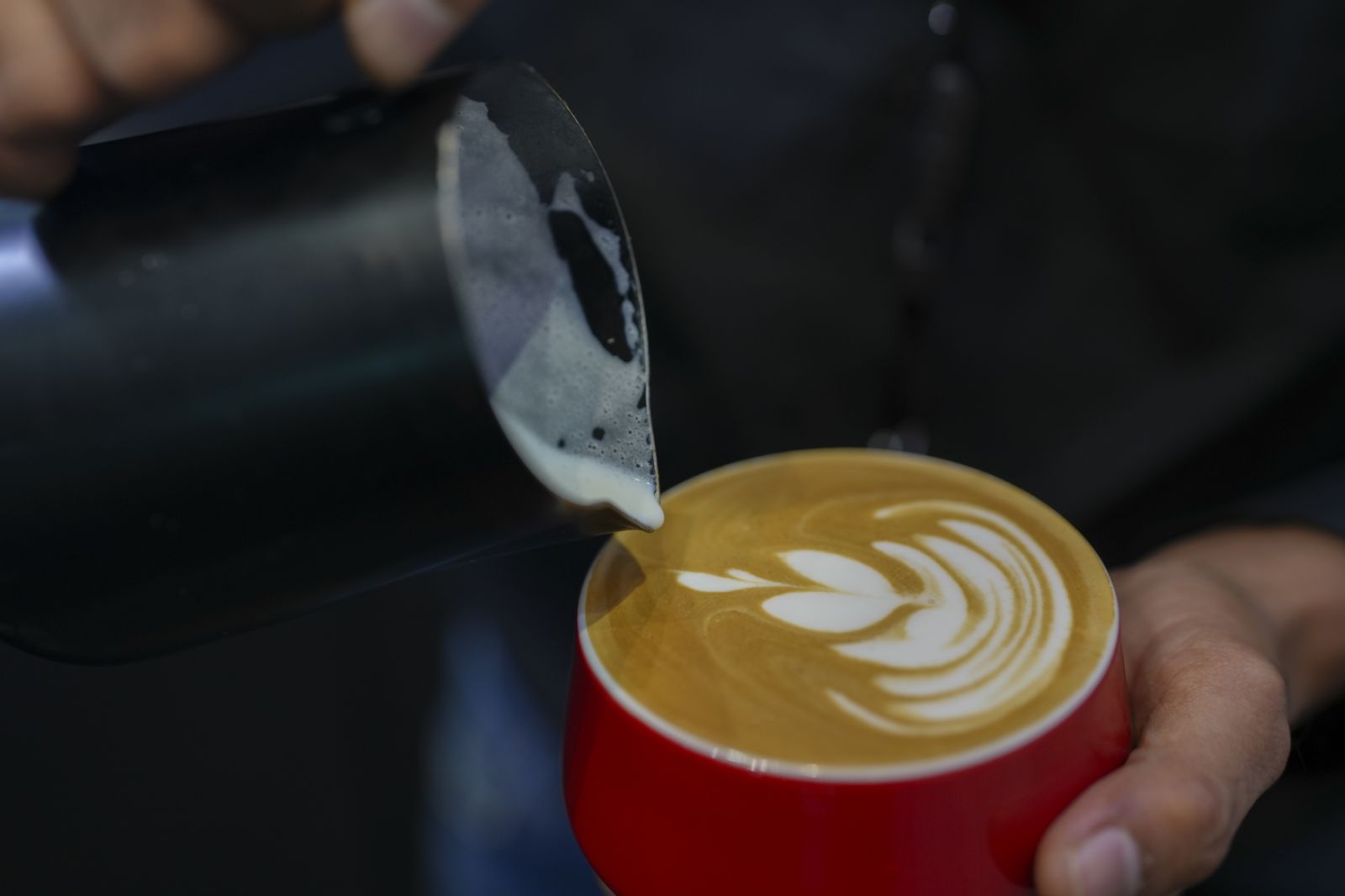
Long before the doors open, a café's espresso machine is already working. A look at the quiet hour before the rush, and what separates a machine that keeps up from one that falls behind.
The street is still dark when the barista unlocks the café. Chairs are still on the tables. The only sound is the espresso machine, switched on by a timer an hour ago, ticking softly as its boilers settle at temperature.
Nobody orders coffee at six in the morning. But this is the hour that decides how the rest of the day goes.
The hour nobody sees
An espresso machine is, at heart, a very precise water heater. To make a good shot, it has to push water through finely ground coffee at roughly nine bars of pressure, at a temperature that usually sits somewhere between 90 and 96 °C, and it has to do that the same way on the first cup of the day as on the three-hundredth.
That last part is the hard part. Heating water is easy. Holding it steady while a queue of customers asks for flat whites, americanos and iced lattes, each one pulling hot water and steam out of the machine at once, is where machines start to show their differences.
So the barista's first job isn't making coffee. It's dialing in: grinding, pulling, tasting and adjusting until the shot tastes right. A few shots go down the drain. The grinder gets nudged finer, then a touch coarser. It's quiet, unglamorous work, and every good café does it every single morning.
Why stability matters more than speed
When people shop for a commercial espresso machine, they often ask how fast it is. The better question is how stable it is.
Imagine the rush at 8:15. Two baristas are working three group heads. Milk is steaming on both wands. Hot water is going into americanos. Each of these draws on the machine's heat. A machine built with enough boiler capacity and good temperature control barely notices. One without it starts to drift: shots run a little hotter, then a little cooler, and the coffee that tasted perfect at six now tastes slightly sour or bitter by eight.
Customers rarely know why their coffee tastes different from yesterday's. They just notice that it does.
That's why serious cafés look closely at things like separate boilers for brewing and steam, how many group heads they actually need at peak, and how quickly the steam wand recovers between jugs of milk. None of these are flashy features. All of them show up in the cup.
The partner nobody talks about: the grinder

Ask an experienced barista what matters most, and many will surprise you by pointing at the grinder rather than the espresso machine.
Espresso is extraordinarily sensitive to grind size. A grind that's slightly too coarse lets water rush through, giving a thin, sour shot. Slightly too fine, and it chokes, giving a bitter, heavy one. A good commercial grinder produces consistent particles, shot after shot, and lets the barista make tiny adjustments as the day warms up and the beans change.
Pairing a great espresso machine with an underpowered grinder is like fitting a sports car with budget tyres. The engine is there, but it can't put the power down.
[tip] When you budget for a new espresso machine, set aside a real share for the grinder. It's the cheapest way to make every cup taste better.
Built for the day, not the demo
Any machine looks good making one coffee at a trade show. The real test is a Saturday morning with a line out the door, or a Tuesday when the same machine has been running for ten hours straight.
When you choose equipment for a café, it helps to picture that day. How many drinks do you expect at your busiest hour? How many baristas will be working side by side? How much of your menu is milk-based? Who will service the machine when something needs attention, and how quickly can they get there?
Those answers point you toward the right machine far more reliably than a spec sheet does.
[takeaways]
- Stability beats speed. Look for a machine that holds its temperature through your busiest hour.
- Count your peak, not your average. Size group heads and boilers for the rush.
- Don't skimp on the grinder. It shapes the cup as much as the machine does.
- Ask about service. Who comes, and how fast, when something needs attention?
[products espresso]
Back to six in the morning
By the time the first customer walks in, the barista has tasted a dozen shots, the grinder is set, the milk is cold and the machine is holding its temperature without complaint. The customer orders a cappuccino, drinks it in five minutes and heads off to work.
They'll never know about the hour that came before. That's the point. When a café's equipment does its job, nobody notices it at all.
Ready when you are
Browse espresso machines